Table of Contents
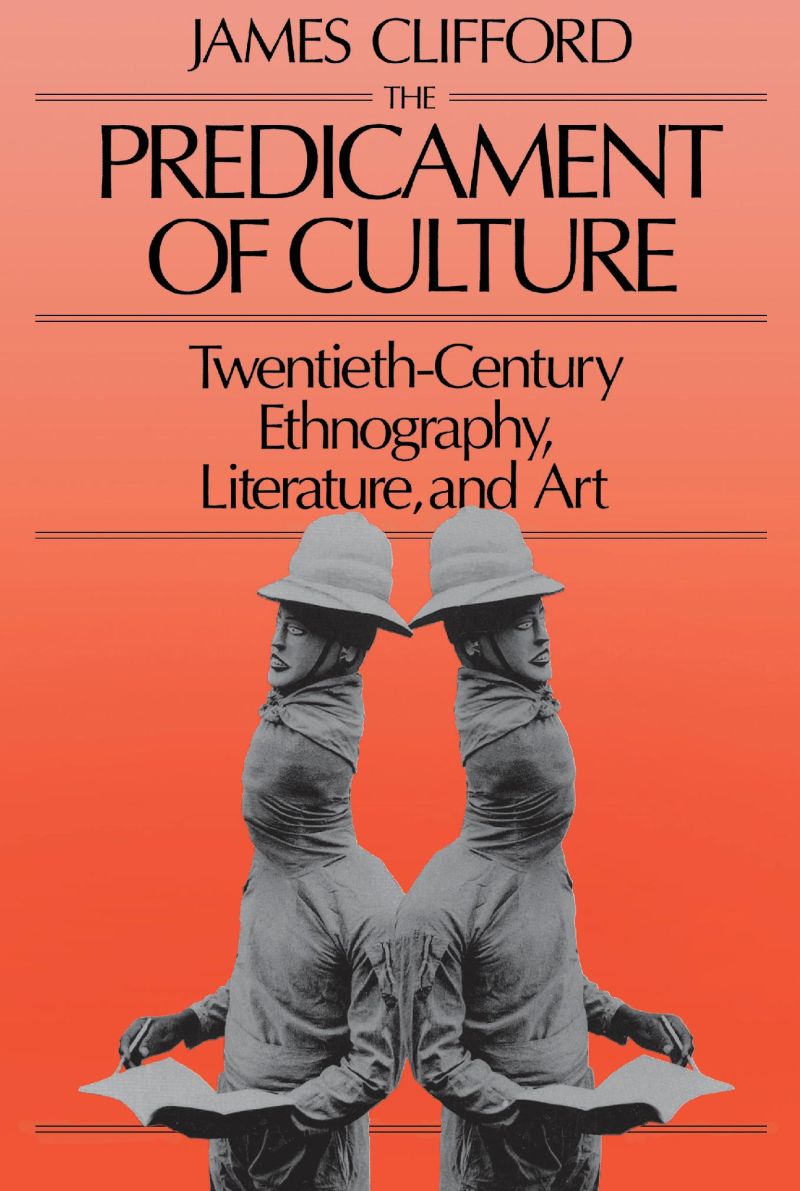
對於我關注的研究議題來說,James Clifford是一位寫過很多相關文章的學者,其他還有John Urry和更當代的Tim Ingold等,要念的文章真的很多很多,不過我才唸第一年,是個人類學的新生兒,給自己一點時間慢慢讀吧。
這篇文章內容是我的上課報告,能夠在研究跟興趣中找到連結,是一件非常幸福的事情。也特別感謝授課教授特別為我找了這篇文章,讓我可以詳讀大師對於人類學研究中關於移動和旅行定義的新解。
雖然這是一篇1992年的演講紀錄整理,但過了34年再來看,依舊是一篇經典好文。課堂報告原文是以英文寫成 (因為課程是全英文授課),貼回自己部落格時,順便翻譯成中文給不想看英文的人看。
I. 引言:研究轉向
詹姆斯·克利福德的《旅行的文化》之所以重要,是因為它質疑了人類學最古老的習慣之一:將文化視為自然地屬於某個單一地點。早期的民族誌通常將村莊想像成一個自給自足的世界,而人類學家則是進入那個世界、停留足夠長的時間,然後描述其文化的人。克利福德認為這種景象過於穩定且過於整潔。文化的形成不僅僅透過紮根、延續性和當地居住,它也受到旅行、流離、接觸、翻譯以及不平等流動形式的塑造。因此,他的文章將焦點從「根源」(roots)轉向了「路徑」(routes),這並非要否定地點的重要性,而是要展示地點本身是如何透過移動的歷史所構成的。
II. 概念簡述:從「根源」到「路徑」
克利福德批判的第一個目標,是他所謂二十世紀人類學的「本土化傾向」。他以馬凌諾斯基(Malinowski)為主要例子。田野調查的經典形象——人類學家在村莊裡的帳篷——暗示了文化可以透過待在一個受限的地點來掌握。對克利福德而言,這個形象掩蓋了太多東西。它將道路、港口、國家、翻譯者、貿易網絡、殖民歷史以及預先形塑了受訪者的過往旅程推向了邊緣。在那個舊模型中,村莊變成了整個文化的提喻(metonym),而其中的人很容易被凍結在原地。
因此,克利福德重新思考了「田野」本身。田野不是一個中立的實驗室,田野調查也不僅僅是進入一個未受污染的當地世界。相反地,田野是一個「流離的居住」(displaced dwelling)之所。人類學家在任何純真意義上都從未完全處於「內部」;田野工作者是暫時住在別處、在那裡工作、建立臨時家園的人,同時仍屬於更大的制度和歷史網絡。這也是為什麼克利福德反對「一種文化對應一種語言」的舊假設。借鑒巴赫金(Bakhtin)的理論,他強調語言內部是多樣且充滿爭議的。無論是訪問者還是「土著」,都沒有人擁有完整且統一的文化語言。
克利福德最強有力的隱喻之一是「村莊裡的帳篷」與「飯店大廳」的對比。帳篷代表了紮根的居住、深度的沉浸和經典的民族誌場景。相比之下,飯店大廳則代表了過境、遭遇、無常,以及不同處境的人們之間的接觸。克利福德將其作為一個「時空體」(chronotope),提出了一種想像文化的定不同方式。儘管如此,他並未將飯店呈現為完美模型。他深知這個形象具有階級性:有些人能輕鬆穿梭於飯店,而其他人則僅以工、僕人或被排斥者的身份出現。這個隱喻的重點不在於所有文化都是膚淺或暫時的,而在於循環和遭遇是文化生活的一部分,不能被視為次要。
這引出了文中更有用的概念之一:「差異的世界主義」(discrepant cosmopolitanisms)。克利福德希望避免一種簡單的假設,即只有特權精英才擁有全球意識。移民勞工、僕人、難民和勞工同樣穿梭於跨國空間並獲得對更廣闊世界的知識。然而,他們的流動性與觀光客或專業旅行者截然不同。旅行從來不是平均分配的,它受到權力、階級、種族、性別和帝國的結構化影響。克利福德的論點並非移動本身具有解放性,而是不同類型的移動產生了不同類型的文化經驗。
克利福德透過「邊界」的形象擴展了這一論點。如果飯店暗示了過境與遭遇,那麼邊界則引入了摩擦、監管和掙扎。邊界地帶特別清楚地表明,身份不僅僅是繼承而來的,它是在壓力下協商出來的。在這些地方,人們被迫在跨越、監管、排斥和接觸的關係中闡明自己是誰。克利福德對「史廣多效應」(Squanto effect)的討論也是如此。史廣多並非等待被發現的被動土著,他本身已是一名旅行者、翻譯者,是先前歷史接觸的產物。透過這個例子,克利福德展示了人類學過去視為紮根的「報導人」,其自身往往擁有流動、混合且在歷史上相互交織的生活。
III. 民族誌實例
如果克利福德的論點僅停留在理論層面,其說服力會弱得多,但這篇文章之所以動人,是因為他匯集的實例。一個令人難忘的案例是莫伊(Moe)家族,這群夏威夷表演者數十年來在遠離夏威夷的地方旅行和演出。他們的故事顯示,文化的本真性(authenticity)不僅僅是在一個原始地點保存的東西,它也可以透過長期的旅行歷史來維持、重塑和展演。在這種情況下,夏威夷人的身份並未因移動而消解,反而是透過移動而再生,儘管形式不再純粹或未經觸動。
另一個引人注目的例子來自斯馬達爾·拉維(Smadar Lavie)對西奈半島貝都因人的研究。克利福德引用了一個場景:貝都因人在外人可能標記為「傳統」的環境中收聽 BBC 全球服務。這個例子之所以重要,是因為它拒絕了地方與全球之間的舊有對立。所謂的傳統空間已經被無線電信號、軍事佔領、旅遊業和更廣泛的地緣政治力量所穿透。這裡的文化不是一個密封的容器,它是遠方權力與地方實踐相遇、互動並被重新加工的場所。
克利福德還重新想像了 1920 和 1930 年代的巴黎,不將其僅僅視為大都市中心,而是一個「迂迴與回歸」之地。對於桑戈爾(Senghor)和塞澤爾(Césaire)等人物來說,巴黎不僅是法國現代性的首都,它也是一個接觸區(contact zone),殖民地臣民在那裡會面、交流思想,並在將「黑人精神」(Negritude)等概念帶往他處之前對其進行發展。在克利福德的描述中,巴黎與其說是一個穩定的中心,不如說是一個由流入和流出的軌跡所塑造的十字路口。
IV. 旅行隱喻的局限性
儘管克利福德的文章很有力,但它也招致了批評,其中一些批評在文中已經預見到了。主要問題很明顯:誰被認可為「旅行者」?從歷史上看,「旅行」通常是透過西方、男性、受過教育的中產階級形象來想像的。即使克利福德試圖擴大這個類別,這個隱喻仍然帶著那段歷史。並非每個人都有同等程度的選擇權去移動,並非每個人都擁有相同的移動權利、移動時的安全,或將移動轉化為知識或威望的權力。
這很重要,因為某些形式的流動是強迫的而非選擇的。移民勞工、被奴役者、難民和流離失所的人群,其移動條件與遊客、學者或世界主義精英大相徑庭。如果不小心,「路徑」、「循環」和「旅行」的語言可能會讓脅迫聽起來過於優雅。克利福德意識到了這個問題,他與霍米·巴巴(Homi Bhabha)的交流在此特別有用。巴巴向他強調了「固定性」(fixity)的重要性:對於某些流離失所的人來說,生存不取決於無止盡的循環,而取決於守住某些符號、隸屬關係和居住形式。這一點至關重要。旅行並未消除對歸屬感的依賴;在許多情況下,移動使歸屬感變得更加迫切,而非更不重要。
因此,我認為對克利福德最深刻的解讀並非「一切都是旅行」,而是必須透過「居住」與「移動」之間的張力來理解文化。當他拒絕簡單的對立時,他的文章最具有說服力。他並不是說根源不再重要,而是說根源本身是歷史性的、充滿爭議的,且往往是透過「路徑」產生的。這是一個更為謹慎的論斷,且依然具有價值。
V. 結論
《旅行的文化》至今仍是一篇具有影響力的論文,因為它改變了研究文化的尺度。克利福德不再僅僅詢問文化位於何處,而是詢問文化是如何透過接觸、旅行、翻譯和不平等的循環而構成的。他將人類學從孤立地點的幻想中推開,轉向對移動和關係的更具歷史性的理解。
他的一些隱喻現在看來可能與二十世紀末的知識背景緊密相連,但這篇文章依然重要,因為它所識別的問題並未消失。我們仍然需要各種方式來描述身份是如何跨越國界形成的、人們在移動時如何保持依附感,以及不平等的流動性如何形塑文化生活。克利福德並未提供一個解決所有問題的最終模型。他提供的是一種更敏銳的觀察文化的方式:不將其視為紮根於一地的現成品,而是將其視為透過路徑、遭遇和鬥爭不斷被製造與重塑的過程。
Review of James Clifford’s “Traveling Cultures”
I. Introduction
James Clifford’s “Traveling Cultures” is important because it questions one of anthropology’s oldest habits: treating culture as if it naturally belongs to a single place. Earlier ethnography often imagined the village as a self-contained world and the anthropologist as someone who could enter that world, stay long enough, and then describe its culture. Clifford argues that this picture is too stable and too neat. Culture is not formed only through rootedness, continuity, and local residence. It is also shaped by travel, displacement, contact, translation, and unequal forms of mobility. His essay therefore shifts the focus from roots to routes, not to deny the importance of place, but to show that place itself is made through histories of movement.
II. From Roots to Routes
The first target of Clifford’s critique is what he calls the localizing tendency of twentieth-century anthropology. He uses Malinowski as a key example. The classic image of fieldwork, which is the anthropologist’s tent in the village, suggests that culture can be grasped by staying in one bounded location. For Clifford, this image hides too much. It pushes to the margins the roads, ports, states, translators, trade networks, colonial histories, and previous journeys that already shape the people being studied. In that older model, the village becomes a metonym for the whole culture, and the people inside it are too easily frozen into place.
Clifford therefore rethinks the field itself. The field is not a neutral laboratory, and fieldwork is not simply a matter of entering an untouched local world. Rather, the field is a site of displaced dwelling. The anthropologist is never fully “inside” in any innocent sense; the fieldworker is someone who temporarily lives elsewhere, works there, and builds a provisional home while remaining part of larger institutional and historical networks. This is why Clifford also resists the old assumption that one culture corresponds to one language. Drawing on Bakhtin, he emphasizes that languages are internally diverse and contested. No one, whether visitor or “native,” possesses a complete and unified cultural language.
One of Clifford’s strongest metaphors is the contrast between the tent in the village and the hotel lobby. The tent stands for rooted dwelling, deep immersion, and the classic ethnographic scene. The hotel lobby, by contrast, stands for transit, encounter, impermanence, and contact among differently positioned people. Clifford uses it as a chronotope (a time-space image) to suggest a different way of imagining culture. Still, he does not present the hotel as a perfect model. He knows that the image is classed: some people move through hotels with ease, while others appear there only as workers, servants, or excluded bodies. The point of the metaphor is not that all culture is shallow or temporary, but that circulation and encounter are part of cultural life and cannot be treated as secondary.
This leads to one of the essay’s most useful concepts: “discrepant cosmopolitanisms.” Clifford wants to avoid the easy assumption that only privileged elites have a global consciousness. Migrant workers, servants, refugees, and laborers also move through transnational spaces and acquire knowledge of wider worlds. However, their mobility is very different from that of tourists or professional travelers. Travel is never evenly distributed. It is structured by power, class, race, gender, and empire. Clifford’s argument is not that movement is liberating in itself, but that different kinds of movement produce different kinds of cultural experience.
Clifford extends this argument through the figure of the border. If the hotel suggests transit and encounter, the border introduces friction, regulation, and struggle. Border zones make it especially clear that identity is not simply inherited; it is negotiated under pressure. In such places, people are forced to articulate who they are in relation to crossing, policing, exclusion, and contact. The same is true in Clifford’s discussion of the “Squanto effect.” Squanto is not the passive native waiting to be discovered. He is already a traveler, a translator, and a product of prior historical contact. By using this example, Clifford shows that the people anthropology once treated as rooted “informants” often had mobile, hybrid, and historically entangled lives of their own.
III. Ethnographic Examples
Clifford’s argument would be much weaker if it remained only theoretical, but the essay is persuasive because of the examples he brings together. One memorable case is the Moe family, Hawaiian performers who spent decades traveling and performing far from Hawai‘i. Their story shows that cultural authenticity is not simply something preserved in one original place. It can also be maintained, reshaped, and staged through long histories of travel. Hawaiian identity, in this case, is not dissolved by movement; it is reproduced through it, though never in a pure or untouched form.
Another striking example comes from Smadar Lavie’s work on Bedouins in the Sinai. Clifford refers to a scene in which Bedouins listen to the BBC World Service while speaking from within what outsiders might label a “traditional” setting. This example matters because it refuses the old opposition between the local and the global. The so-called traditional space is already crossed by radio signals, military occupation, tourism, and wider geopolitical forces. Culture here is not a sealed container. It is a site where distant powers and local practices meet, interact, and are reworked.
Clifford also reimagines Paris in the 1920s and 1930s not simply as a metropolitan center, but as a place of detours and returns. For figures such as Senghor and Césaire, Paris was not merely the capital of French modernity. It was also a contact zone in which colonial subjects met, exchanged ideas, and developed concepts such as Negritude before taking them elsewhere. In Clifford’s account, Paris becomes less a stable center than a crossroads shaped by incoming and outgoing trajectories.
IV. Limits of the Travel Metaphor
Even though Clifford’s essay is powerful, it also invites criticism, and some of that criticism is already anticipated within the text itself. The main problem is clear: who gets recognized as a traveler? Historically, “travel” has often been imagined through a Western, male, educated, and bourgeois figure. Even when Clifford tries to expand the category, the metaphor still carries that history. Not everyone moves with the same degree of choice. Not everyone has the same right to mobility, the same safety while moving, or the same power to turn movement into knowledge or prestige.
This matters because some forms of mobility are forced rather than chosen. Migrant laborers, enslaved people, refugees, and displaced populations move under conditions very different from those of tourists, scholars, or cosmopolitan elites. If one is not careful, the language of routes, circulation, and travel can make coercion sound too elegant. Clifford is aware of this problem, and his exchange with Homi Bhabha is especially useful here. Bhabha presses him on the importance of fixity: for some displaced people, survival depends not on endless circulation but on holding on to certain symbols, affiliations, and forms of dwelling. That point is crucial. Travel does not eliminate the need for attachment. In many cases, movement makes attachment more urgent, not less.
For that reason, I think the strongest reading of Clifford is not that “everything is travel,” but that culture must be understood through the tension between dwelling and movement. His essay is most convincing when it refuses simple oppositions. He does not say that roots no longer matter. He says that roots themselves are historical, contested, and often produced through routes. That is a much more careful claim, and it remains valuable.
V. Conclusion
“Traveling Cultures” remains an influential essay because it changes the scale at which culture is studied. Instead of asking only where a culture is located, Clifford asks how it has been made through contact, travel, translation, and unequal circulation. He pushes anthropology away from the fantasy of isolated places and toward a more historical understanding of movement and relation.
Some of his metaphors now feel tied to the intellectual moment of the late twentieth century, but the essay still matters because the problem it identifies has not disappeared. We still need ways to describe how identities are formed across borders, how people remain attached while moving, and how unequal mobilities shape cultural life. Clifford does not give a final model that solves all of these issues. What he does provide is a sharper way of seeing culture: not as a finished whole rooted in one place, but as something continually made and remade through routes, encounters, and struggle.