Table of Contents
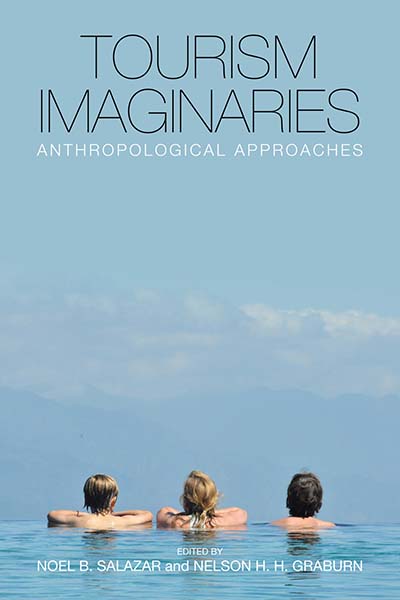
課堂上原本的報告是下面的英文版本,但放回自己部落格中,我再增加一個中文翻譯版:
《旅遊想像:一個概念性路徑》批判性評論
I. 導論
諾爾·薩拉札(Noel B. Salazar)在 2012 年發表的文章〈旅遊想像:一個概念性路徑〉中,不僅將旅遊視為人的物理移動,更將其視為一個由地方及其居民的共享圖像、觀念與表徵所形塑的過程。薩拉札主張,這些「旅遊想像」使目的地顯得具吸引力、具異國情調或充滿意義,但同時也將複雜的文化簡化為平庸且易於市場化的形式。就此而言,旅遊不僅關乎旅行本身,更關乎人們如何想像其預期所見與所感。這篇文章的重要性在於,它將注意力從作為經濟活動的旅遊,轉向受表徵、權力與移動性建構的文化與政治過程。
II. 核心理論與方法論
薩拉札論點的核心在於「旅遊想像」這一概念。他將其定義為一種社交傳遞的表徵組合(representational assemblages),這些表徵與個人想像互動,並形塑了人們理解世界的方式。這些想像並非單純的私人幻想,而是集體性且制度化的腳本,目的地透過這些腳本被分類與消費。因此,旅遊行銷並非憑空創造欲望,而是汲取了歷史與殖民時期的舊神話(如「高貴的野蠻人」或「消失的伊甸園」),以使地方對遊客產生吸引力。透過這種方式,旅遊高度依賴於「差異」的投射與「他者」的產出。
第二個核心理論洞察是「(不)移動性的政治」(politics of (im)mobility)。薩拉札指出,旅遊通常優先考量遊客的移動權,同時卻要求當地人在象徵層面上保持「不移動」。為了滿足遊客對真實性的渴望,當地人常被預期要呈現出根植原地、靜態且不受現代性影響的形象;相比之下,遊客則與移動、現代性與自由連結。與此緊密相連的是「帝國主義式的鄉愁」:遊客往往嚮往一個已被殖民化與全球化(正是這些力量使旅遊成為可能)所改變的傳統世界。
由於想像本身是無形的且難以直接觀察,薩拉札提出了一套方法論,透過物質形式與流通管道來研究它們。他建議追蹤想像變得可視化的「渠道」,包括旅遊指南、宣傳冊、紀錄片、明信片、旅遊部落格以及導遊的展演。為了理解這些表徵如何流通,他引用了「文化迴路」(circuit of culture),強調生產、表徵、消費與調節之間相互關聯的過程。他也採用行動者網絡理論(ANT)來說明想像在流傳時並非固定不變,而是透過人類與非人類行動者的網絡不斷被轉譯、修改並重新嵌入。對於薩拉札而言,理論與方法是密不可分的:如果想像是持續變動的,那麼研究它們的唯一方法就是觀察它們如何旅行,以及它們如何在不同地方顯現。
III. 民族誌分析與詮釋
薩拉札透過印尼與坦尚尼亞的民族誌案例來支持其理論。在日惹(Yogyakarta)的水城(Tamansari),導遊展演了一套想像中的「東方主義」過去(特別是圍繞皇家後宮的幻想),以滿足遊客對異國情調與鄉愁體驗的欲望。在坦尚尼亞北部,馬賽族導遊常被要求表現得「永恆」且「真實」,以符合遊客心中「高貴野蠻人」的刻板印象。這些例子顯示,旅遊想像不僅透過媒體流通,更透過當地旅遊工作者的身體、聲音與展演來落實。
這些民族誌案例也揭示了旅遊的後殖民維度。薩拉札的分析顯示,旅遊往往運作出一種強大的「他者化」機制。遊客追求的未必是當代的社會現實,而是受殖民文學、媒體表徵與舊有人類學刻板印象所形塑的「神話式過去」。這解釋了為什麼旅遊往往推崇「未改變的」、「傳統的」與「未開發的」。這種表徵確認了遊客自身作為現代與流動者的地位,同時將當地人口安置在永恆與不移動的象徵角色中。
然而,薩拉札並未將當地人僅視為被動的受害者。他最重要的貢獻之一是展現了旅遊中能動性(agency)的複雜性。當地導遊、中介者與旅遊工作者之所以複製這些想像,可能是因為其經濟生存仰賴於此,但他們也策略性地利用其跨文化知識。透過調整自我展現並將文化轉譯成遊客能理解的形式,他們累積了薩拉札所稱的「世界主義資本」(cosmopolitan capital)。這產生了一個弔詭:為了在社會或地理上移動,當地工作者可能必須先演繹一個「不移動且傳統」的身分。最終,薩拉札著作的價值不只是理論,而是它揭露了鏡頭背後的權力運作。
IV. 批判與侷限
儘管薩拉札提供了強而有力的概念工具,但本文仍有幾處侷限。首先,他的討論主要圍繞著「西方遊客」與「開發中目的地」。雖然這種焦點可以理解,但存在著複製「西方主體」與「非西方他者」對立關係的風險。實際上,旅遊想像往往由更多元的行動者共同產出,包括開發中國家本身的旅遊局、政府機構、中介者與商業利益。這些參與者並非西方刻板印象的被動接收者,而是異國情調表徵的積極生產者與傳播者。
其次,研究想像本身存在明確的方法論困難。薩拉札承認想像是無形的,必須透過電影、指南、部落格與展演等具體渠道間接研究。然而,這些材料未必能完全代表遊客或當地行動者真正的想法與感受。旅遊的鮮活經驗往往比文字或圖像更具矛盾性與不穩定性。這在表徵與實際感知之間造成了不可避免的鴻溝,顯示出該方法論雖然有用,但未必能捕捉旅遊經驗的完整複雜性。
第三,文章高度關注想像的「流通」,卻較少關注促成或限制這種流通的「結構性條件」。想像並非自由流動,其產出與成功取決於社會文化結構、政治邊界、物質基礎設施、簽證制度以及跨國資本的運作。如果研究過於聚焦於流通物,而未能充分檢視允許或阻止流通的制度與物質條件,分析中將存在重要的盲點。
最後,薩拉札本人將此文視為一種概念性引介而非一套完整的理論。這是它的優點,也是它的限制。該框架提出了重要的問題,但也需要進一步跨學科的發展。若要更全面地理解旅遊想像,有賴於人類學、旅遊研究、媒體研究、後殖民理論與移動研究之間的持續對話。
V. 結論
薩拉札的文章做出重要貢獻,他向我們展示了旅遊不僅關乎旅行,更關乎表徵、想像與不平等的權力。透過將焦點從單純的經濟交換轉向旅遊想像的流通,他揭示了現代旅遊如何依賴於歷史產出的「看與詮釋他者」的方式。同時,他也提醒我們,當地人並非遊客凝視下的靜態客體,而是協商、複製並有時重塑這些想像的積極參與者。即便如此,這篇文章不應被視為最終框架。其價值在於開啟了批判性視角,同時邀請我們對結構性不平等、方法論複雜性以及更廣泛的移動與表徵政治進行後續研究。
從我身為旅遊部落客與專業領隊的經驗來看,這篇文章與我長期的實務觀察產生了強烈的共鳴。 甚至在閱讀薩拉札之前,我就常在部落格與臉書的文字中反思,旅行是如何被出發前的期待、幻想與圖像所形塑的。在設計旅遊產品與行程時,我往往必須考慮到這些「想像」。許多旅人在抵達時都帶著一份「必吃、必買、必訪、必拍」的清單,這些項目成為他們覺得必須完成的「夢想」。但在實務中,最能留下深刻印象的時刻,往往不是清單上的那些,而是那些落在原始旅遊想像之外的、非預期的遭遇與計畫外的經驗。
這種反思也與 Sheller 和 Urry 關於移動性的討論產生了連結。對我來說,旅行絕不僅僅是抵達一個固定的目的地。我常說,最美的風景「在路上」。當一個人開始想像一場旅程、制定計畫,並將這種想像轉化為實踐的那一刻起,旅程就已經開始了。從這個意義上說,旅遊不僅關乎抵達,更關乎想像、移動、將旅程轉化為現實的過程,以及沿途產生的意義。將薩拉札的作品與移動範式結合閱讀,更有助於釐清我多年旅遊實務中所學到的一個核心觀念:旅行從不只是消費,它更是一種中介、一種期待,以及一場在幻想與生活經驗之間不斷進行的協商。
A Critical Review of “: A Conceptual Approach”
I. Introduction
Noel B. Salazar’s 2012 article, “Tourism Imaginaries: A Conceptual Approach,” examines tourism not simply as the physical movement of people, but as a process shaped by shared images, ideas, and representations of places and their inhabitants. Salazar argues that these “tourism imaginaries” make destinations appear attractive, exotic, or meaningful, while at the same time reducing complex cultures to simplified and marketable forms. In this sense, tourism is not only about travel itself, but also about how people imagine what they expect to see and experience. His article is important because it shifts attention from tourism as an economic activity to tourism as a cultural and political process structured by representation, power, and mobility.
II. Core Theory and Methodology
At the center of Salazar’s argument is the concept of the tourism imaginary. He defines tourism imaginaries as socially transmitted representational assemblages that interact with personal imaginings and shape how people make sense of the world. These imaginaries are not merely private fantasies, but collective and institutionalized scripts through which destinations are categorized and consumed. Tourism marketing, therefore, does not create desire from nothing. Rather, it draws on older historical and colonial myths, such as the image of the “noble savage” or the “vanished Eden,” in order to make places desirable to tourists. In this way, tourism depends heavily on the projection of difference and the production of the “Other.”
A second major theoretical insight is the politics of (im)mobility. Salazar shows that tourism often privileges the mobility of tourists while demanding the symbolic immobility of local people. To satisfy tourists’ desire for authenticity, locals are often expected to appear rooted, static, and untouched by modernity. Tourists, by contrast, are associated with movement, modernity, and freedom. Closely connected to this is the idea of imperialist nostalgia: tourists often long for a traditional world that has already been transformed by the same historical forces of colonialism and globalization that made tourism possible in the first place.
Because imaginaries are intangible and difficult to observe directly, Salazar also proposes a methodology for studying them through their material forms and channels of circulation. He suggests tracing the conduits through which imaginaries become visible, including guidebooks, brochures, documentaries, postcards, travel blogs, and the performances of tour guides. To understand how these representations circulate, he draws on the “circuit of culture,” which emphasizes the interrelated processes of production, representation, consumption, and regulation. He also adopts Actor-Network Theory (ANT) to show that imaginaries do not remain fixed when they travel. Instead, they are translated, modified, and re-embedded through networks of human and non-human actors. For Salazar, theory and method are inseparable. If imaginaries are constantly on the move, then the only way to study them is to look at how they travel and how they manifest in different places.
III. Ethnographic Analysis and Interpretation
Salazar grounds his theoretical claims in ethnographic examples from Indonesia and Tanzania. In Yogyakarta, guides at the Tamansari Water Castle perform an imagined Orientalist past, particularly fantasies surrounding the royal harem, in order to satisfy tourists’ desire for an exotic and nostalgic experience. In northern Tanzania, Maasai guides are often expected to present themselves as timeless and “authentic,” fitting tourists’ stereotypical image of the “noble savage.” These examples show that tourism imaginaries are not only circulated through media, but also enacted through the bodies, voices, and performances of local tourism workers.
These ethnographic cases also reveal the postcolonial dimensions of tourism. Salazar’s analysis shows that tourism often functions as a powerful mechanism of othering. Tourists are not necessarily seeking contemporary social reality; rather, they often seek a mythologized past shaped by colonial literature, media representation, and older anthropological stereotypes. This helps explain why tourism so often values the “unchanged,” the “traditional,” and the “uncivilized.” Such representations confirm the tourist’s own position as modern and mobile, while placing the local population in a symbolic role of timelessness and immobility.
At the same time, Salazar does not portray local people only as passive victims. One of his most important contributions is to show the complexity of agency within tourism. Local guides, intermediaries, and tourism workers may reproduce these imaginaries because their economic survival depends on doing so, yet they also use their transcultural knowledge strategically. By adjusting their self-presentation and translating their culture into forms tourists can understand, they accumulate what Salazar describes as “cosmopolitan capital.” This creates a paradox: in order to move socially or geographically, local workers may first have to perform an immobile and traditional identity. Ultimately, the value of Salazar’s work isn’t just in the theory, but in how it exposes the power plays behind the camera lens.
IV. Critique and Limitations
Although Salazar offers powerful conceptual tools, the article also has several limitations. First, his discussion is largely framed around Western tourists and developing destinations. While this focus is understandable, it risks reproducing the familiar opposition between Western subjects and non-Western Others. In reality, tourism imaginaries are often co-produced by a wider range of actors, including local tourism boards, state agencies, intermediaries, and business interests in developing countries themselves. These participants are not simply passive recipients of Western stereotypes, but active producers and distributors of “exotic” representations.
Second, there are clear methodological difficulties in studying imaginaries. Salazar acknowledges that imaginaries are intangible and must be approached indirectly through concrete conduits such as films, guidebooks, blogs, and performances. However, these materials may not fully represent what tourists or local actors actually think and feel. The lived experience of tourism is often more contradictory and unstable than the textual or visual forms through which imaginaries are traced. This creates an unavoidable gap between representation and actual perception, and it suggests that the methodology, while useful, may not capture the full complexity of tourism experience.
Third, the article pays significant attention to the circulation of imaginaries, but gives less attention to the structural conditions that enable or constrain this circulation. Imaginaries do not move freely. Their production and success depend on sociocultural structures, political boundaries, material infrastructures, visa regimes, and the operations of transnational capital. If research focuses mainly on what circulates without sufficiently examining the institutional and material conditions that allow or prevent circulation, important blind spots remain in the analysis.
Finally, Salazar himself presents the article as a conceptual introduction rather than a fully developed theory. This is one of its strengths, but also one of its limits. The framework opens up important questions, yet it also requires further interdisciplinary development. A fuller understanding of tourism imaginaries would benefit from continued dialogue among anthropology, tourism studies, media studies, postcolonial theory, and mobility studies.
V. Conclusion
Salazar’s article makes an important contribution by showing that tourism is not only a matter of travel, but also a matter of representation, imagination, and unequal power. By shifting the focus from economic exchange alone to the circulation of tourism imaginaries, he reveals how modern tourism depends on historically produced ways of seeing and interpreting others. At the same time, he reminds us that local people are not static objects of the tourist gaze, but active participants who negotiate, reproduce, and sometimes reshape these imaginaries. Even so, the article should not be treated as a complete framework. Its value lies in opening a critical perspective on tourism, while also inviting further work on structural inequality, methodological complexity, and the broader politics of mobility and representation.
From my own experience as a travel blogger and professional tour leader, this article also resonates strongly with what I have long observed in practice. Even before reading Salazar, I had often reflected in my blog and Facebook writing on how travel is shaped by expectations, fantasies, and the images people carry with them before departure. In designing travel products and itineraries, I often have to take these imaginaries into account. Many travelers arrive with a checklist of “must-eat,” “must-buy,” “must-visit,” and “must-photograph” experiences, and these items become part of a dream they feel obliged to complete. Yet in practice, the moments that leave the deepest impression are often not the ones on the list, but the unexpected encounters and unplanned experiences that fall outside the original tourism imaginary.
This reflection also connects with Sheller and Urry’s discussion of mobilities. For me, travel is not simply about reaching a fixed destination. I have often said that the most beautiful scenery is “on the road.” The moment a person begins to imagine a journey, to make plans, and to turn that imagination into practice, the journey has already begun. In this sense, tourism is not only about arrival, but also about imagination, movement, the practice of turning a journey into reality, and the meanings that emerge along the way. Read together, Salazar’s work and the mobilities paradigm both help clarify an idea that I have learned through years of work in tourism: travel is never only about consumption, but also about mediation, expectation, and the ongoing negotiation between fantasy and lived experience.
References
Salazar, N. B.
2012 Tourism Imaginaries: A Conceptual Approach. Annals of Tourism Research, 39(2), 863-882.